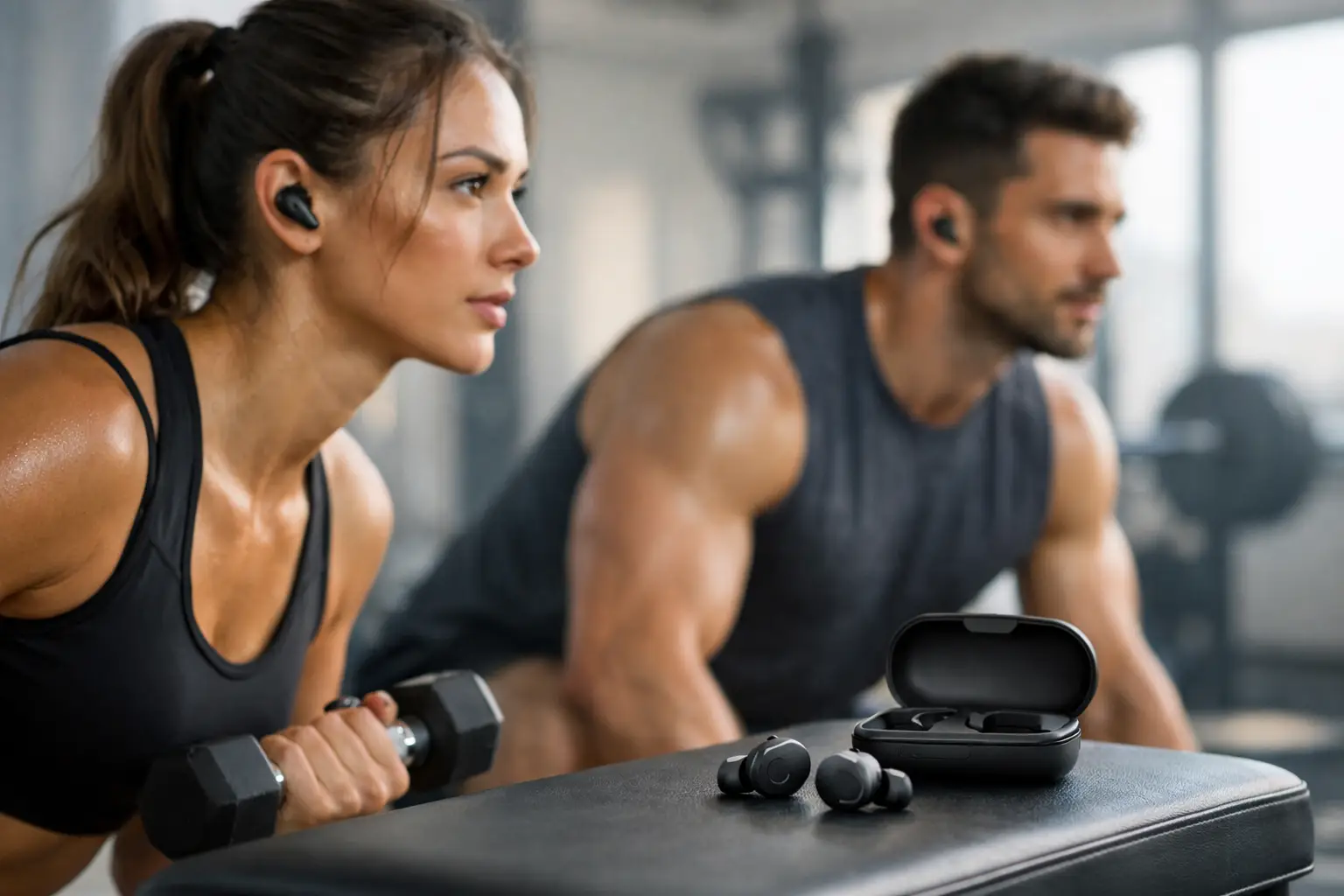
A burpee is a fast way to find out whether your earbuds actually fit. If one starts sliding loose before your second set, great sound quality will not save the experience. The best wireless earbuds for working out are built around the realities of movement: sweat, changing pace, quick adjustments, and the need to stay focused without fussing with your gear.
For busy gym-goers, runners, walkers, and anyone squeezing in a home workout between daily responsibilities, the right pair can make a routine feel easier to start and more satisfying to finish. Here is what to look for before you shop.
Fit is the feature that affects everything else. Before you commit to a pair, think about how you actually move during a workout. Many people underestimate how much small motions—turning your head, wiping sweat, adjusting a sleeve—can affect earbud stability. Even low‑impact routines involve enough shifting to expose a poor fit. Trying a few jumping jacks or a quick warm‑up stretch before your first real session can reveal whether a pair will stay put. It is also worth paying attention to how the earbuds feel after you break a sweat, since moisture can slightly change the way silicone tips grip your ear.
An earbud that feels secure lets you run, lift, stretch, or take a fitness class without repeatedly pushing it back into place. It also creates a better seal in your ear, which can improve bass and keep outside noise from taking over your playlist.
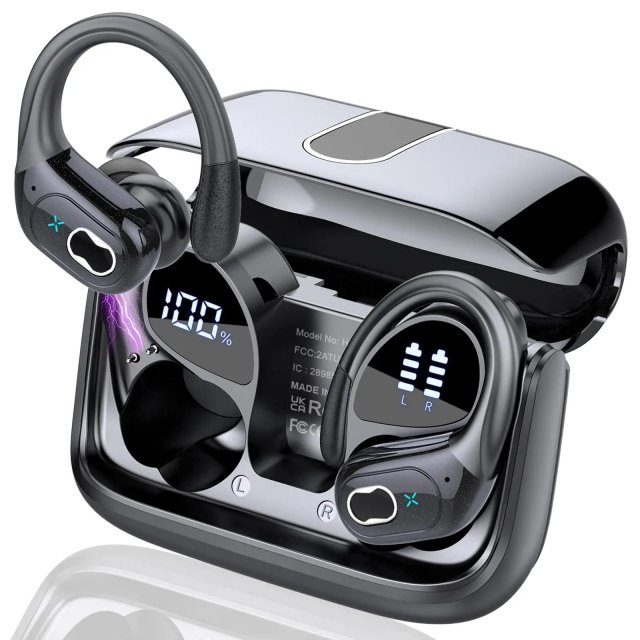
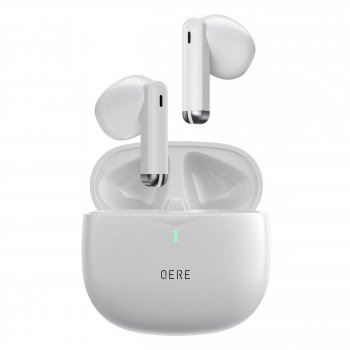
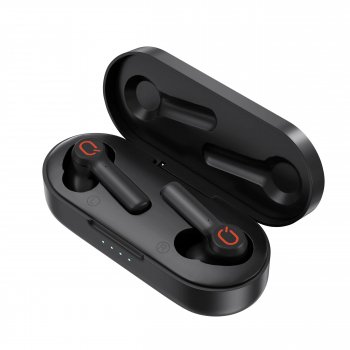
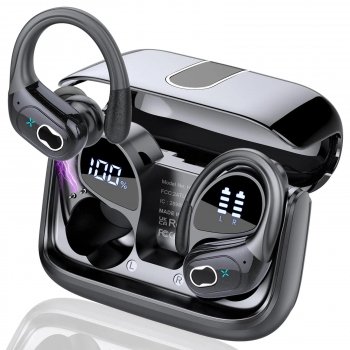
Most workout earbuds use one of three approaches. Standard in-ear buds rely on silicone tips in several sizes. Ear-hook designs wrap around the outer ear for extra stability. Ear-wing designs use a small flexible fin that rests inside the ear for a more locked-in feel without the larger profile of a hook.
There is no single best style for every person. Ear hooks can be an excellent choice for interval training, trail running, and high-impact workouts, but some people find them bulky with glasses or hats. Compact in-ear buds are easy to carry and often more comfortable for everyday use, though they need the right tip size to stay secure. If you are between sizes, try the larger tip first. A proper seal should feel snug, not painful.
Comfort matters just as much as security. A pair may stay put during a 20-minute run but become irritating during a long walk, commute, or training session. Look for lightweight earbuds and soft tips, especially if you plan to wear them for more than an hour at a time.
Your routine should guide your shopping decisions. A person who walks the neighborhood after dinner has different needs from someone training for a half marathon or doing explosive gym circuits.
For strength training, stability and simple controls matter most. You want earbuds that do not shift when you lie back on a bench or move through squats, plus controls that are easy to use between sets. Good passive noise isolation can help if a crowded gym soundtrack competes with your own music.
For runners, consider a secure fit, sweat protection, battery life, and awareness of your surroundings. Outdoor runners may prefer an ambient sound mode that lets in traffic, cyclists, and conversation. This is especially useful on shared paths and near intersections. Noise cancellation is helpful on a treadmill or in a loud gym, but it is not always the smartest choice outdoors.
For yoga, Pilates, and low-impact home workouts, comfort may matter more than maximum grip. Low-profile earbuds are less likely to press uncomfortably against a mat during floor work. If your sessions include guided classes, clear voice playback can be more valuable than oversized bass.
For high-intensity interval training, dance workouts, or sports drills, prioritize an ear-hook or winged design and reliable sweat resistance. Sudden movement exposes loose-fitting earbuds quickly, so this is one place where a more secure design is worth considering.
Workout gear has to handle moisture. Earbuds are usually rated with an IP code, which indicates their resistance to dust and water. You do not need to memorize every rating, but knowing the basics makes shopping much easier.
An IPX4 rating generally means protection from splashes and sweat. That can be enough for regular gym sessions or a light run. Higher water-resistance ratings can offer more confidence for intense training, rainy conditions, or people who sweat heavily. Still, water resistance does not mean every pair is designed for swimming, showering, or being rinsed under a faucet.
Treat the charging case carefully, too. The earbuds may be sweat resistant while the case is not. Wipe the buds dry before placing them back in the case, and leave the lid open for a few minutes after a particularly sweaty session. It is a small habit that can help keep charging contacts clean and dependable.
Great workout audio is less about chasing a perfect studio sound and more about finding energy, clarity, and control. A bass-forward sound can make a run or lifting session feel more motivating, while balanced tuning may be better for podcasts, coaching apps, and calls.
Active noise cancellation can be a useful gym feature. It reduces the hum of treadmills, air-conditioning units, and busy fitness floors, helping you hear your content at a more reasonable volume. But it comes with a trade-off: some people feel less connected to their surroundings, and battery life may drop when it is turned on.
Transparency or ambient mode works in the opposite direction by letting in outside sound. It is helpful when you need to hear an announcement at the gym, chat with a workout partner, or stay alert outdoors. The best option depends on where you exercise, not on which feature sounds more premium.
Also consider how the earbuds handle voices. If you use guided workouts, follow a coach, or take calls on a walk, clear mids and a decent microphone matter. A thumping beat is fun, but instructions like “switch sides” need to come through clearly.
Do not shop based only on the biggest battery number on the box. Check both playback per charge and the total listening time available with the charging case. A pair offering several hours per charge is usually enough for most workouts, while a case that adds multiple recharges is more useful for a full week of training and errands.
Quick charging is especially convenient for people with packed schedules. Even a short charge while you change clothes or make coffee can provide enough power for a walk, gym visit, or last-minute class. If you often forget to charge devices, a visible battery indicator can spare you the unpleasant surprise of one silent earbud.
Remember that noise cancellation, high volume, frequent calls, and extreme temperatures can reduce real-world battery life. It is better to choose a pair that comfortably exceeds your usual session length than one that only just makes it through.
Touch controls can look clean and modern, but they are not always ideal mid-workout. Some people accidentally pause music while adjusting an earbud, while others find physical buttons easier to use with sweaty fingers or gloves. There is no universal winner, but the controls should be simple enough that you can change volume, skip a track, or switch modes without breaking your rhythm.
App support can be a welcome extra if it lets you adjust equalizer settings, customize controls, or locate a misplaced earbud. It should not be required just to make basic functions work. Convenience is the point, so avoid features that make a straightforward routine feel complicated.
Before adding workout earbuds to your cart, think through these four practical questions:
Price matters, but value is about more than getting the lowest number. A more affordable pair that fits well, handles sweat, and lasts through your workouts can be a better everyday choice than a feature-packed option that stays in a drawer.
A little care goes a long way. After each workout, wipe your earbuds with a soft, dry cloth and remove any buildup around the tips or speaker mesh. Let them dry fully before charging. Replace worn silicone tips when they no longer create a secure seal, because fit and sound can both suffer over time.
Keep the case out of direct heat, avoid leaving it in a hot car, and use the charging cable or power source recommended by the manufacturer. These simple habits help protect the battery and keep your earbuds ready for the next session.
The right pair should disappear into your routine: secure enough to forget, comfortable enough to keep wearing, and ready whenever motivation finally shows up. Shop smart, choose for the way you move, and let your next playlist carry you through that final rep.
Shop our Earbuds Collection









Leave a comment