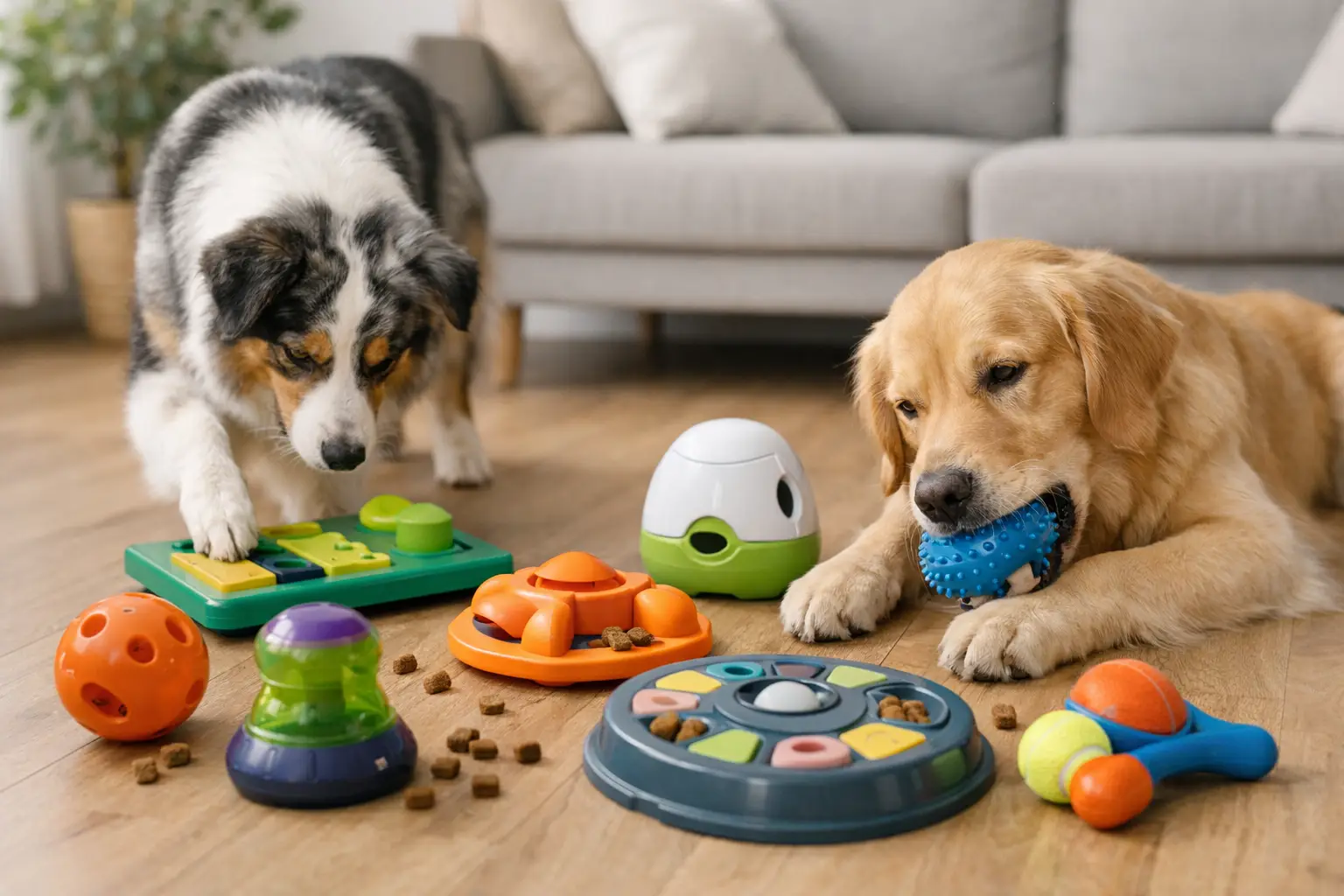
A dog who has emptied the toy basket, barked at the window, and started inspecting the couch cushions is rarely being “bad.” More often, they need a job. The best interactive dog toys for boredom give dogs a healthy outlet for curiosity, movement, chewing, and problem-solving – especially during work calls, rainy afternoons, or those long stretches between walks.
Not every dog needs the same kind of entertainment. A food-motivated Beagle may happily work on a puzzle for 20 minutes, while a high-energy herding breed may lose interest unless the toy moves. The right choice comes down to your dog’s play style, chewing habits, confidence level, and how much supervision the toy requires.
A standard plush toy can be comforting, but an interactive toy asks your dog to do something. It may hide treats, wobble unpredictably, make a sound, roll away, or require your dog to slide, lift, lick, or sniff to earn a reward. That small mental challenge can make a big difference for dogs who get restless indoors.
The best options are engaging without being frustrating. If a toy is too easy, your dog solves it in seconds. If it is too difficult, they may walk away or start chewing the edges instead. Look for adjustable difficulty, sturdy materials, and a size that fits your dog safely. For treat toys, make sure openings are large enough for cleaning and not so narrow that food gets stuck.
Treat-dispensing balls are a smart first interactive toy because most dogs understand them quickly. Fill one with kibble or a few small treats, then let your dog nudge, paw, and roll it around to release the reward.
They work particularly well for dogs who eat meals too fast. Instead of serving dinner in a bowl, use part of the meal in the ball. Start with an easy setting so your dog learns the game, then make it more challenging as they improve.
Puzzle boards use compartments, sliders, flaps, or rotating pieces to hide treats. They are ideal for dogs who enjoy sniffing and figuring things out more than chasing a moving object.
Choose a beginner-level board for a first-time puzzle player. Advanced boards can be excellent for experienced dogs, but they are not automatically better. A dog that repeatedly fails may become discouraged, so rotate between easy and challenging puzzles to keep play rewarding.
A snuffle mat turns snack time into a scent game. Sprinkle dry food or treats between fabric strips, and your dog uses their nose to search for every bite. Since sniffing is naturally calming for many dogs, this can be a useful option before visitors arrive or when your dog needs a quiet indoor activity.
Use dry food rather than wet treats to keep the mat cleaner, and pick it up when the game is over. Dogs that shred fabric or swallow non-food items should only use snuffle mats with close supervision.
Lick toys are simple, affordable, and surprisingly effective for helping a dog settle. Spread a thin layer of dog-safe wet food, plain pumpkin puree, or unsweetened peanut butter without xylitol inside the toy, then freeze it for a longer-lasting challenge.
Licking can keep a dog occupied while you prepare dinner, answer emails, or welcome guests. The trade-off is cleanup: choose a dishwasher-safe option and avoid overfilling it with high-calorie extras. Your dog’s regular food is often the easiest choice.
Wobble feeders stand upright, tip when nudged, and dispense small pieces of food as they bounce back. Their unpredictable movement keeps many dogs interested longer than a basic treat ball.
They are especially useful for enthusiastic eaters and medium-to-large dogs with room to play on a hard floor. If you live in an apartment or have easily startled pets, consider a quieter rubber-base style to reduce the clatter.
For dogs who love plush toys but do not destroy them, hide-and-seek sets add a playful challenge. Small squeaky toys are tucked inside a larger plush container, and your dog pulls them out one by one.
This style is more about play and prey-like searching than food motivation. It is a fun choice for gentle chewers, but it is not a match for dogs that tear stuffing apart or swallow squeakers. Check every piece often and retire damaged toys promptly.
Battery-powered rolling toys can spark interest in dogs that need more movement. Some change direction when bumped, while others flash or make sounds to encourage chasing and pouncing.
These are best for short, supervised play sessions. The motion can be exciting, but some anxious or noise-sensitive dogs find it overwhelming. Introduce the toy while it is turned off first, then let your dog investigate at their own pace.
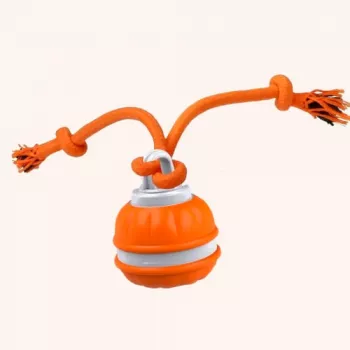
A tug toy with treat slots brings together two big dog favorites: pulling and snacking. It can be a great way to redirect a dog that wants to chew furniture or grab hands during play.
For safety, choose a durable toy with smooth edges and use it for interactive play rather than leaving it out all day. Tug should feel cooperative, not like a contest. Let your dog win sometimes, and pause if they become overly wound up.
Some dogs respond instantly to sound. Squeaky puzzle toys combine that excitement with hidden compartments or removable pieces, making them more engaging than a single squeaker plush.
These are a nice fit for playful dogs that enjoy searching, but they need supervision. A determined chewer may quickly reach the squeaker or small inserts. Durability matters more than cute details when your dog has powerful jaws.
Textured rubber chew toys with grooves or ridges can hold soft food and make chewing more purposeful. They are often easier to use than a complex puzzle, which makes them a good option for puppies, senior dogs, or dogs still learning how interactive toys work.
The best fit depends on chewing strength. Soft rubber may be comfortable for older dogs, while heavy chewers need a tougher design made for their size. No chew toy is truly indestructible, so inspect it regularly for cracks or missing pieces.
Recordable buttons can teach dogs to press for a treat, a toy, or a simple activity. This is less of a solo toy and more of a shared training game, but it gives smart, people-focused dogs a fresh way to engage with you.
Start with one clear word and reward every successful press. Keep sessions short and upbeat. Dogs do not need a large vocabulary for button play to be fun – one or two reliable cues can create a satisfying little routine.
You do not always need a new purchase to create a challenge. Put a few pieces of kibble in a muffin tin, cover each cup with a tennis ball, and let your dog discover how to move the balls aside.
This is a quick way to test whether your dog enjoys puzzles before investing in a more advanced toy. Stay nearby, especially if your dog tends to chew tennis balls, and use a sturdy ball sized appropriately for their mouth.
Start with what already motivates your dog. If they follow every food crumb in the kitchen, choose a treat puzzle, snuffle mat, or frozen lick toy. If they race after anything that moves, a rolling toy or wobble feeder may hold attention better. Dogs that carry plush toys around the house may enjoy a gentle hide-and-seek set.
Next, be honest about chewing. A toy that works beautifully for a small, gentle dog may not last one afternoon with a powerful chewer. Check the manufacturer’s size guidance, avoid toys with loose parts, and supervise any new toy until you know how your dog uses it.
It also helps to think about your routine. Food puzzles are great when you need quiet independent play. Motion toys are better when you have time to monitor an active session. Rotating two or three toys throughout the week keeps them feeling new without filling every corner of your home with pet gear.
Interactive toys are helpful, but they are not a replacement for walks, training, social time, or a good nap beside their favorite person. Think of them as an easy way to add variety to the day. Use a puzzle for breakfast, offer a lick toy during a busy hour, or bring out a tug toy for a five-minute play break.
Watch what changes after a week or two. If your dog settles more easily, chews fewer household items, or greets you with a calmer wag instead of a burst of pent-up energy, you have likely found a toy that earns its place. A little purposeful play can make home feel more fun for your dog – and much more peaceful for everyone else.








Leave a comment