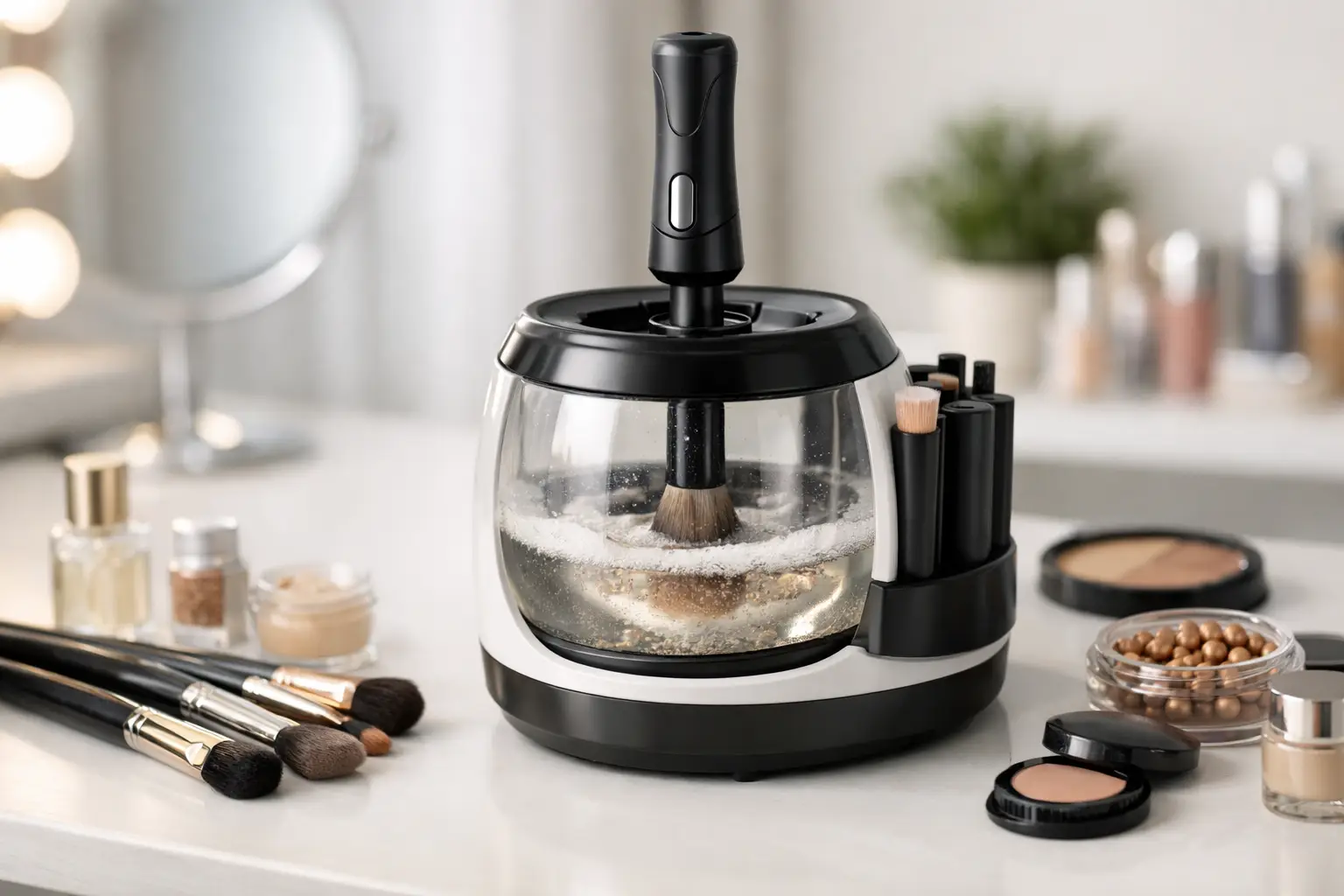
That favorite foundation brush can look perfectly fine while holding onto days of liquid makeup, skin oil, sunscreen, and dust. A makeup brush cleaner machine is designed for the part of a beauty routine that is easy to postpone: giving brushes a proper wash before buildup affects their feel, performance, and freshness.
For anyone balancing a busy morning, a full makeup bag, and a bathroom counter that is already doing too much, the appeal is obvious. These small tools can turn brush care from a sink-side chore into a quick, repeatable routine. Still, not every machine works the same way, and faster does not always mean better for every brush.
Most makeup brush cleaner machines use a spinning base and a set of flexible collars that hold brush handles of different sizes. You add a small amount of brush cleanser and water to the included bowl, secure the brush, and let the device rotate the bristles in the solution. After the wash cycle, the brush is lifted above the liquid and spun again to remove excess water.
The result is a brush that is usually much cleaner and drier than it would be after a quick rinse under the faucet. That matters for brushes used with liquid or cream products, including foundation, concealer, blush, and contour. Those formulas cling to bristles more stubbornly than powder makeup and can make a soft brush feel stiff or streaky over time.
A machine is not a magic reset button. If a brush has months of heavy buildup, a short spin may not reach makeup packed deep near the ferrule, the metal section where bristles meet the handle. In that case, a gentle hand wash followed by another spin can be the more effective approach.
The best beauty tool is often the one you will actually use. Hand-washing a full collection can take time, and waiting for every brush to air-dry overnight may leave you reaching for yesterday’s brush anyway. A cleaner machine makes regular maintenance more realistic, especially when you need a favorite face brush again soon.
Quick drying is the feature that stands out for many shoppers. A brush should not be put away soaking wet, and it is frustrating to wash it only to find it unusable for the next makeup look. Spinning removes a large amount of moisture, helping bristles dry faster when they are placed flat or bristles-down afterward.
There is also a practical hygiene benefit. Clean brushes apply makeup more evenly, keep colors truer, and reduce the transfer of old product from one look to the next. For people with breakout-prone or sensitive skin, regular cleaning can be a sensible part of keeping tools from collecting unnecessary residue. It is not a treatment for skin concerns, but it is a simple habit that supports a cleaner routine.
A makeup brush cleaner machine makes the most sense for people who use several brushes each week and want less friction in their routine. It can be an especially useful pick for beauty enthusiasts with dense foundation brushes, busy professionals who need tools ready for the next day, or anyone shopping for a practical beauty gift.
It is also a smart option for households where a vanity is shared. Instead of leaving brushes in a cup until someone remembers to clean them, the machine creates a clear process: wash, spin, dry, and store. Small routines are easier to keep when they do not require a long setup or a pile of towels.
If you own only two or three lightweight powder brushes and already wash them regularly by hand, a machine may be more of a convenience upgrade than a necessity. That is not a bad thing. Convenience is valuable, but it helps to buy with realistic expectations rather than assuming every beauty tool needs to earn a permanent spot on the counter.
Start with brush compatibility. A useful machine should include a range of collar sizes so it can grip slim eye brushes as well as thicker face-brush handles. Check whether your most-used brushes can fit comfortably and whether the brush head has enough space to spin without bumping the bowl.
Power style affects where you will use it. Battery-powered models are easy to move around and keep cords off a crowded vanity. USB-rechargeable options can be convenient if you prefer not to replace batteries. A plug-in version may suit a dedicated beauty station, but make sure the cord length and outlet location work for your space.
The bowl design matters more than it seems. A clear bowl lets you see when the water is getting cloudy, while a stable, easy-to-rinse bowl makes cleanup less annoying. Look for materials that feel sturdy and for controls that are straightforward enough to use without turning brush washing into a project.
It also helps to consider the brushes you own, not just the machine in the product photos. Very large powder brushes, unusually shaped handles, delicate natural-hair brushes, and brushes with loose ferrules may need special care. If a brush is already shedding or separating at the base, spinning it at high speed can make the problem worse.
Use lukewarm water, not hot water. Hot water can soften the glue inside the ferrule, eventually leading to shedding or loose bristles. Add only a small amount of gentle brush cleanser or mild soap. Too much product creates excess foam, which makes it harder to see whether makeup has lifted and adds more rinsing work.
Secure the handle in the collar, then position the brush head so the bristles are in the cleaning solution while the ferrule stays above the water line. This is one of the most important details. Soaking the ferrule can allow water to seep into the adhesive and shorten the life of the brush.
Spin in short intervals rather than holding the button down for a long time. Check the water, refresh it if it becomes heavily tinted, and repeat as needed. Once the brush looks clean, lift it out of the solution and spin again to remove water. Finish by reshaping the bristles and laying the brush flat on a clean towel to dry completely.
Never put damp brushes upright in a holder with the bristles at the top if water can run down into the ferrule. It may look neat, but it is not the kindest storage method for wet brushes. Give them airflow and patience before the next use.
A machine is excellent for regular upkeep and for cutting down drying time. Hand washing still has a place, particularly for very dense brushes, beauty sponges, delicate brushes, or tools carrying stubborn long-wear product. Gentle pressure from your fingers can work cleanser through areas a spinning cycle may miss.
Think of the machine as a time-saving helper, not a replacement for good brush care. A simple rhythm works well for many makeup users: spot-clean or machine-clean frequently used face brushes every week, wash eye brushes when color buildup is noticeable, and give the entire collection a more thorough hand wash when needed. Frequency depends on how often you wear makeup, what formulas you use, and whether you share tools.
Fresh brushes can make a familiar makeup routine feel more polished. Foundation glides on with less patchiness, powder shades stay closer to their intended color, and your tools feel better in your hand. A makeup brush cleaner machine will not choose your perfect lipstick shade or organize your vanity for you, but it can remove one more tedious task from the week.
Choose a model that fits your brush collection and your actual routine, then use it often enough to make the convenience count. The best time to clean your brushes is not someday before a special event. It is when the process is quick enough that you will do it tonight.












Leave a comment