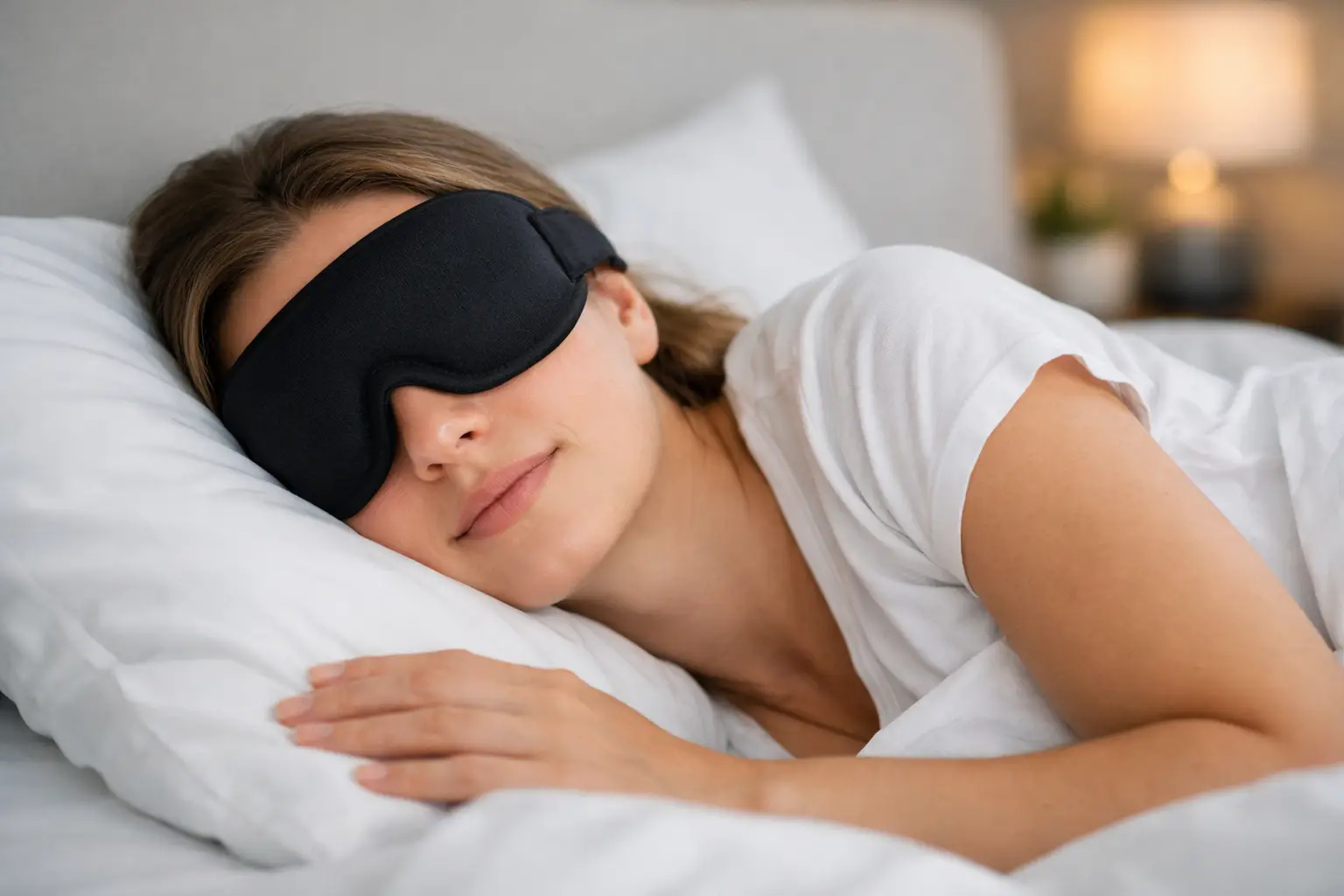
A sleep mask can turn a bright bedroom, early sunrise, or mid-afternoon travel nap into a darker, calmer place to rest. But sleep masks for side sleepers need to solve a problem standard masks often miss: the moment your cheek meets the pillow, bulky edges, stiff cups, and tight straps can create pressure exactly where you do not want it.
For anyone who changes position through the night or wakes with mask lines across their face, comfort matters as much as darkness. The right design should stay put without squeezing, protect your eyes from light, and feel easy enough to forget you are wearing it.
Side sleeping puts one side of your face in direct contact with the pillow. A mask that feels fine while sitting up can shift, wrinkle, or press into your temple once you lie down. Thick molded eye cups may rub against the pillow, while narrow elastic straps can slide toward your ears or pull at your hair.
That does not mean every slim mask is automatically better. Very flat masks can allow light to enter around the nose, especially if you have a smaller or narrower face. The best choice balances a low-profile shape with enough structure around the eyes to block light comfortably.
Your pillow also changes the experience. A soft, plush pillow may cushion a slightly thicker mask, while a firmer pillow can make even a small seam feel noticeable. If you use a contoured pillow, wear headphones at night, or sleep with skincare products on, those details can affect which material and strap style works best.
Start with profile. Look for a mask described as low-profile, slim, or side-sleeper-friendly. This generally means the outer edge sits close to the face instead of extending far from it. A lower profile reduces the chance that your pillow will push the mask inward.
Next, check the area around the eyes. Some people prefer a gently contoured mask because it creates room to blink and avoids direct contact with the eyelids. Others sleep better in a soft flat mask that follows the face closely. If light sensitivity is your main concern, a contoured style with a flexible nose bridge may offer better coverage. If pressure is the deal-breaker, a lightweight flat style may be the smarter pick.
The strap deserves just as much attention as the front of the mask. Adjustable straps help you find a secure fit without over-tightening, which is useful if you move around at night. A wider elastic band spreads pressure more evenly than a thin strap, and a back clasp positioned away from the pillow-contact area can prevent a hard spot at the base of your head.
Fabric is a personal comfort choice. Smooth satin-style materials can feel cool and reduce friction against skin and hair. Cotton is breathable and familiar, especially for people who tend to sleep warm. Memory foam padding can improve light blocking, but it may feel warmer and bulkier. For a mask you plan to wear every night, choose a fabric that feels good against your skin and is simple to clean.
It is tempting to choose the thickest mask because it looks like it will block the most light. For side sleepers, more padding is not always more comfortable. Extra depth can work against you when it is pressed into a pillow for hours.
A better test is whether the mask seals gently around the nose and cheekbones while you are lying down. You should not need to crank the strap tight to keep light out. If the mask only works when it feels restrictive, its shape probably is not a good match for your face.
Try your mask in your usual sleep position before deciding it is a keeper. Turn onto both sides, settle your head into the pillow, and notice whether an edge presses near your eye socket, temple, or ear. Make small strap adjustments first. If pressure remains, switching to a slimmer design is often more helpful than making the strap looser.
Shopping gets easier when you focus on features that affect nightly use rather than flashy extras. These details are especially useful for side sleepers:
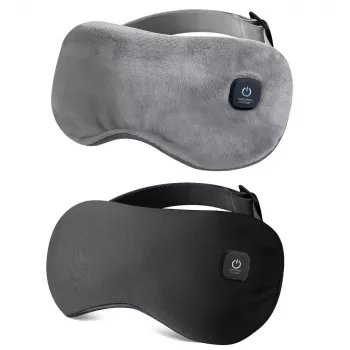
Bluetooth speakers, built-in lights, and other add-ons can be fun for travel or relaxation, but they are usually not ideal for dedicated side sleeping. Any hard component near the temples or ears may become uncomfortable when pressed against a pillow. For sleep, simple often wins.
If your mask slips off overnight, resist the urge to tighten it immediately. First, check whether the strap is sitting too high or too low on the back of your head. A centered position usually provides better stability. Slick hair and satin pillowcases can also make a difference, so a wider strap or a mask with a more secure adjustment may help. Some people also find that switching to a mask with a split strap or silicone grip sections keeps everything in place without adding pressure.
If light leaks in around your nose, a mask with a soft nose flap can help. Be careful with overly stiff nose pieces, though. They may block light well at first but become distracting when you shift positions. Flexible fabric or lightly padded foam is usually more forgiving. You can also try gently molding the mask with your hands before bed to help it sit more naturally against your face.
If you wake up with headaches, facial marks, or sore ears, the fit is likely too tight or the mask is putting pressure in the wrong place. A sleep mask should feel comfortably secure, not compressed. Consider a lighter option, a wider band, or a model with less padding around the outer edges. Rotating between two different styles can also help you figure out which design your face tolerates best.
For people who sleep hot, breathability can be the deciding factor. Choose lighter fabrics, wash the mask regularly, and avoid thick foam designs if they make you feel warm. On the other hand, if you mainly need a mask for flights or hotel rooms with unpredictable lighting, a slightly more padded style may be worth the added warmth for stronger blackout coverage. Travelers often prefer masks with contoured eye cups, since they block light well without pressing on your eyelids.
A mask is not only for people with bright bedrooms. It can be a practical part of a more consistent wind-down routine. Shift workers may use one to rest during daylight hours. Parents can keep one handy for quick naps when the house is finally quiet. Travelers can make unfamiliar rooms feel more sleep-friendly without relying on perfect curtains.
It can also help if a partner keeps a different schedule. A bedside lamp, bathroom light, or early-morning phone screen may be enough to interrupt a light sleeper. A comfortable mask gives you a little more control over your space without requiring anyone else to change their routine.
For the best experience, pair your mask with habits that support rest: lower the room temperature if possible, silence alerts, and put the mask on when you are ready to settle down rather than wearing it while scrolling. The goal is not to make bedtime complicated. It is to make darkness easy when you need it.
When comparing sleep masks, prioritize your real sleeping position over a product photo or a long feature list. A soft, adjustable, low-profile mask is usually the strongest starting point for side sleepers, especially if you want everyday comfort rather than occasional travel use.
PO-Store is built around useful finds that make everyday routines feel easier, and a well-chosen sleep mask fits that idea perfectly. Look for clear sizing and care details, consider how your pillow feels at night, and give yourself a few nights to adjust. The best mask is the one that keeps the light out and disappears from your attention before you fall asleep.












Leave a comment